What is the most effective way to insulate a house?
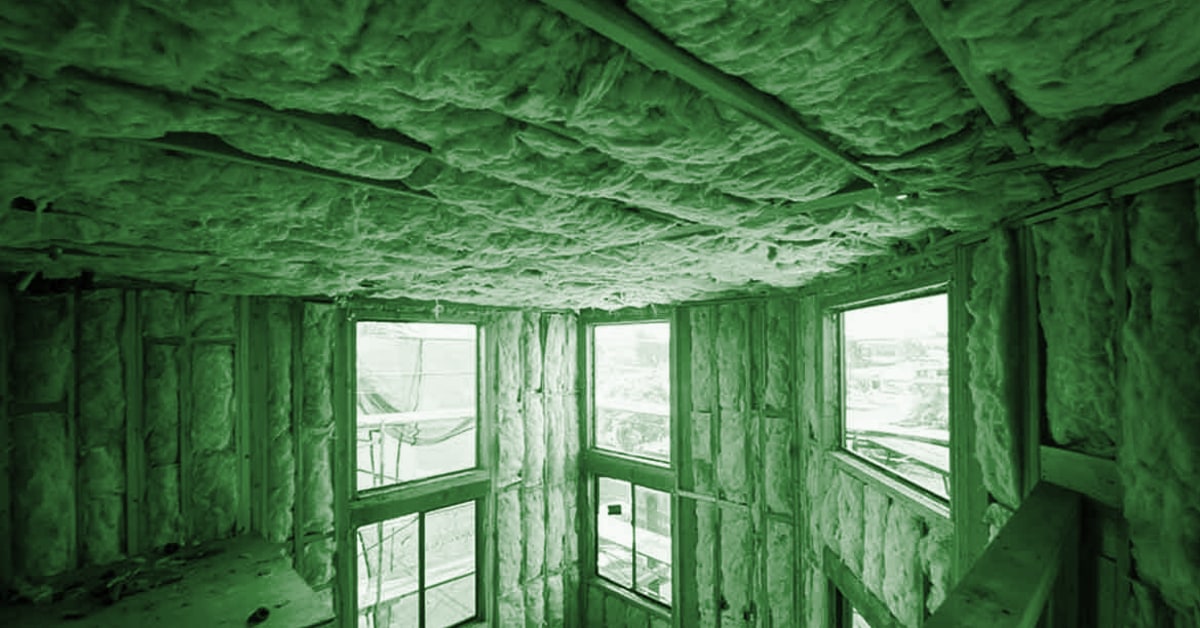
Some opportunities may include weatherstripping windows and doors, pull-down stairs, and attic entrances. If it is less than an equivalent of R-30 (about 10 to 13 inches), you could probably benefit by adding more. Also install an air barrier to prevent cold air in the garage from short circuiting the insulation underneath the subfloor. As whole-house insulation, spray foam offers higher R-value and better air sealing than batt or loose-fill insulation.
For optimal energy efficiency, your home should be properly insulated from the roof down to its foundation. Insulate and air seal any knee walls — vertical walls with attic space directly behind them — in your home as well. Sealing and Insulating are often the most cost-effective ways to make a home more comfortable and energy efficient and you can do it yourself with guidance from ENERGY STAR. Insulate all exterior walls, including (3A) walls between living spaces and unheated garages, shed roofs, or storage areas; (3B) foundation walls above ground level; (3C) foundation walls in heated basements.
During the construction process, many builders insulate the outside of foundation walls before backfilling. Before insulating, seal any air leaks and make roof and other necessary repairs. Having a well-insulated, weatherized home is an important step before making other energy upgrades, such as heat pumps , since a more efficient home could be sized for a smaller, lower-cost system. To find out if you have enough attic insulation, measure the thickness of the insulation.
Second, identify whether you can address the problem areas on your own. There are many small, simple steps you can take to improve the air sealing of your home. In addition, if you live in an area with termites, you’ll have to consider how termite protection will affect the choice and placement of insulation in your home and plan for a means of inspection. First, identify where potential trouble spots in your home may be for air leaks (such as window frames, outlets and switches, and exterior door frames).
If it is located in a conditioned part of the house, also remember to insulate. Unlike other types of insulation that are designed to resist conduction and limit convection, a radiant barrier’s purpose is to reflect heat back toward the heat source. The structural elements are usually exposed in these areas, which makes it easy to see what type of insulation you have and to measure its depth or thickness (inches). If it is located in a conditioned part of the house, also remember to insulate and air seal your attic access.
Can you put too much insulation in a house?
Bear in mind, that building code is the minimum standard a home can be built with, it’s never the ‘ideal’ amount. Making a house “too tight or “over-insulated does not translate to issues in your energy efficiency, air quality, energy costs, or home comfort. When insulation is installed in a loft, it can block the flow of air, which can lead to condensation if there is insufficient ventilation. It’s as simple as this – adding one inch of insulation to a wall that has only one inch of insulation is certainly well worth the investment, in any climate.
In the UK, the recommended insulation thickness to prevent condensation varies depending on the location and type of construction. Even better, if you choose environmentally friendly materials, you can make your insulation extra environmentally friendly. Blocking ventilation Loft insulation works by keeping warm air inside your home, which is great for comfort and energy savings. But each time you add another layer of insulation, that latest layer is doing a lot less work for you because there isn’t as much heat flowing through it to begin with.
Trapping moisture inside Insulation can also soak up moisture like a sponge if there’s a roof leak or if warm, humid air seeps in and condenses. However, when too much insulation is added especially without considering ventilation or the building’s orientation it can lead to overheating during warmer weather. Moreover, if the building structure is not strong enough to support the weight of the insulation, it can lead to serious safety hazards. Therefore, the impact of insulation on condensation is highly dependent on how it is installed and what materials are used.
Installing too much insulation can be expensive and may not provide significant benefits in terms of energy efficiency. In reality, there is an optimal balance between the up-front cost of insulation and the long-term energy performance and savings you could expect to enjoy.
How much does it cost to insulate a 2000 sq ft house?
The barrier reflects radiant heat away from its surface, rather than absorbing it like most other insulation materials. It provides an extremely high thermal resistance (R-value) per inch compared to other insulating materials. Some rolled insulation is made from natural fibers like cotton or sheep’s wool, or minerals like rock wool. Let’s discuss how each type of insulation is installed, the materials used in each process, and how much it costs to purchase them.
It’s possible to find reclaimed or recycled materials, but achieving optimal efficiency with blown-in insulation can be challenging without professional expertise. Installing insulation requires working with potentially hazardous materials and tools and being in tight spaces or on ladders. The chart specifies how many inches of each insulation material are needed to achieve each R-value, rounded up to the nearest ¼ inch. Here’s a more detailed (but still approximate) look at the costs associated with insulating different areas within your home.
The insulation type and R-value you need depend on your climate zone and the part of the home you are insulating. Adding insulation improves energy efficiency and may reduce utility costs by 10% to 40%, depending on the home’s location, current insulation levels, and insulation type. Don’t forget to factor insulation removal labor into your estimated budget for air sealing your attic space. Keep in mind, however, that these are average estimates, and actual costs are likely going to vary depending on various factors like the type of insulation and local labor rates.
We’ll explore the various factors that can influence the overall price, such as the type of insulation material, the size of the area to be insulated, and the specific needs of your home. This requires at least 3 of spray foam in most areas, which creates additional costs for materials and installation labor. Spray foam and rigid foam board work best as they provide insulation and a vapor barrier to block moisture. Multiply the price per square foot by the number of square feet that need to be insulated to calculate the total cost for all necessary materials.
Why is my house still cold after insulation?
And as your paid-for heat escapes through your attic, it creates a vacuum that sucks in cold air from the outdoors. The majority of cold weather comfort issues are caused by heat escape, poor insulation, and inefficient heating systems. But if your thermostat is working just fine and you’ve still got a cold house with the heat on, it’s important to take steps to resolve it. It’s usually the holes around windows that are letting the cold air in not the windows themselves.
Even the best windows can still allow cold air in without adequate air sealing, leading to discomfort. A reason can be gaps or compression in insulation can limit its effectiveness, diminishing thermal resistance. Ultimately, yes, your cold house is losing valuable heat, but when that vacuum is created, your house is also pulling in moisture and allergens both of which aren’t healthy for you or your home. Even with newly installed insulation, unsealed gaps around windows, doors, and ductwork can allow cold air to infiltrate your home and warm air to escape.
Even with new insulation, your home might feel cold due to air leaks and drafts around windows, doors, and vents. Air leaks are a cause of a large heating and cooling burden on your HVAC system and they cause heat to escape your house. An oversized furnace, for example, may cycle on and off too frequently, preventing it from adequately warming surfaces and leading to cold spots in your home. Combine that with an insufficient heating system, or even an energy-efficient heater that’s hampered by air leaks and poor insulation, and you have the perfect recipe for a continuously cold home.
Lastly, if critical areas like the rim joist or basement perimeter lack sufficient insulation, they can become pathways for significant heat loss and cold air intrusion. It’s possible that your furnace is working less due to the insulation, but if it’s heat output is blowing directly onto the thermostat in one.